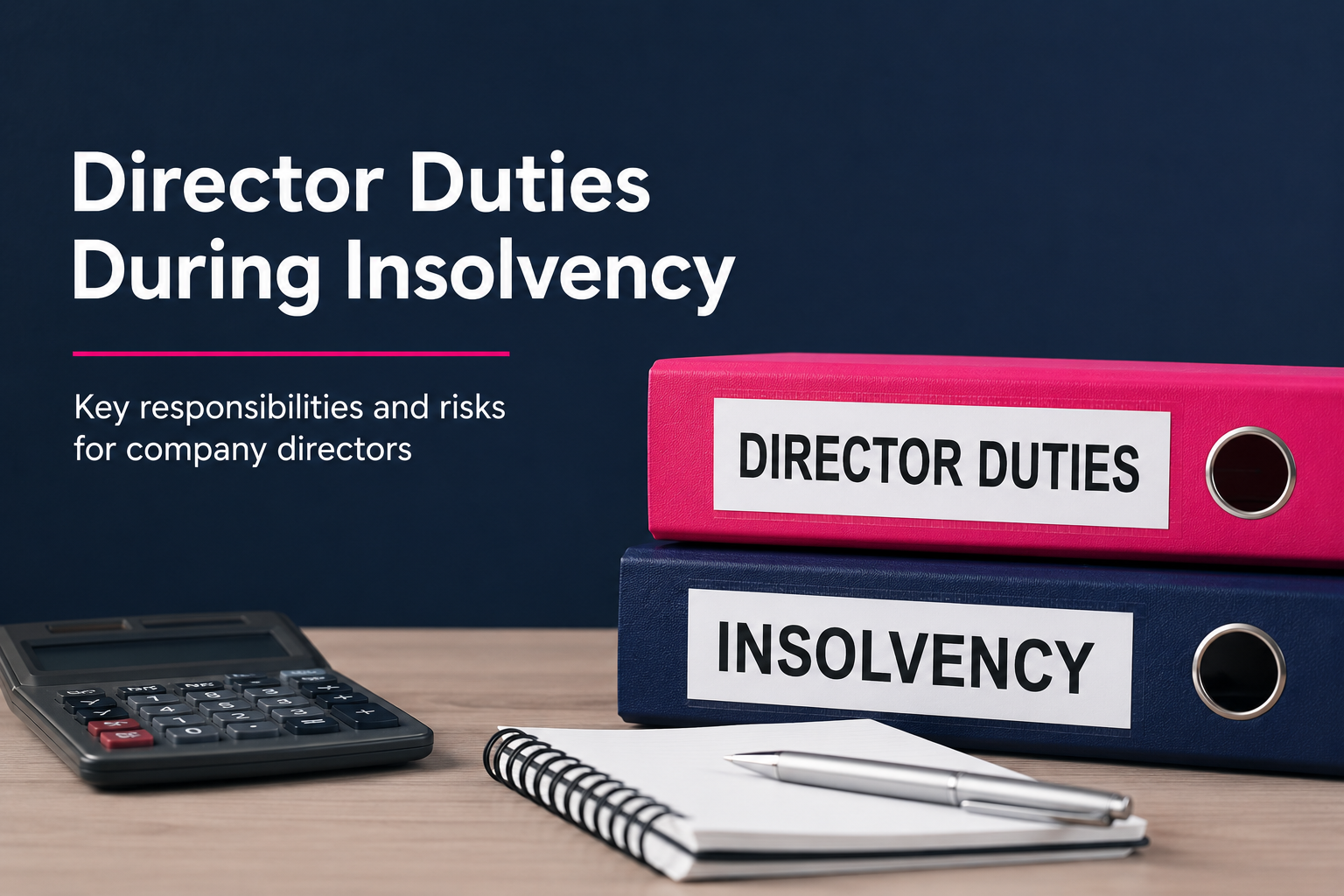
Director duties during insolvency have come under renewed attention after a cleaning company director was banned for seven years following the transfer of nearly £200,000 from an insolvent business.
The case, linked to the so-called “Atherton scheme”, highlights the serious responsibilities directors face when companies enter financial distress and the risks of taking inappropriate action during insolvency proceedings.
Philip Walker, director of Leicestershire-based Solus Facilities, was found to have moved company funds after the business entered financial difficulty in 2023. Investigators said the director used the controversial “Atherton scheme”, a process often linked to attempts to avoid company liabilities and creditor claims.
The case highlights the serious responsibilities directors face when a company becomes insolvent and the risks of moving assets or funds away from creditors during financial distress.
Understanding Director Duties During Insolvency
The Insolvency Service has continued to increase enforcement action against directors accused of misconduct during insolvency proceedings.
Director disqualifications can arise from a range of issues, including:
- transferring company assets improperly
- preferring connected parties over creditors
- failing to pay taxes
- wrongful trading
- breaching fiduciary duties
Recent cases have seen directors banned for moving company funds after insolvency, failing to pay HMRC liabilities, and continuing to trade while knowing businesses could not meet their obligations.
Atherton Schemes and Director Duties During Insolvency
The “Atherton scheme” has become associated with companies being transferred to third parties shortly before collapse, often for minimal sums, while debts remain unpaid.
According to reports, directors resign and replacement directors are appointed before the company enters liquidation. Investigators have warned that these arrangements can place creditors at greater financial risk and may lead to lengthy director disqualifications.
The Insolvency Service has increasingly targeted these arrangements as part of wider efforts to tackle director misconduct and improve accountability during insolvency.
How Directors Can Meet Their Duties During Insolvency
When a company becomes insolvent, directors must act in the best interests of creditors rather than shareholders.
This means directors should avoid:
- removing company assets
- making unusual payments
- prioritising connected parties
- taking further credit when repayment is unlikely
- continuing to trade irresponsibly
Failing to meet these obligations can lead to:
- director disqualification
- personal liability claims
- compensation orders
- investigations by the Insolvency Service
Understanding director duties during insolvency can help reduce the risk of personal liability and disqualification.
Seeking Advice Early Can Reduce Risk
Many directors facing financial pressure delay seeking professional advice, which can often worsen the situation.
Early intervention can help businesses explore:
- restructuring options
- repayment arrangements
- business recovery solutions
- formal insolvency procedures where necessary
Obtaining advice at the right stage can also help directors demonstrate they acted responsibly and took appropriate steps once insolvency concerns became clear.
Professional advice can help directors comply with their director duties during insolvency while exploring recovery or closure options.
Call to Action
If your company is facing financial difficulties, seeking professional advice early can help protect both your business and your position as a director. At DCA Business Recovery, our experienced team provides confidential guidance on recovery, restructuring and insolvency solutions tailored to your circumstances.
Learn more about our services HERE or contact DCA Business Recovery today for expert support.